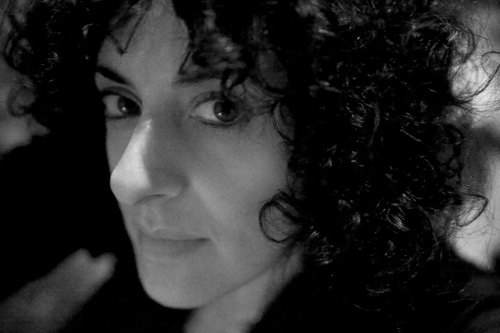
ABOUT Myriam A. Rafla
I am a full-time educator, doctoral candidate and documentary photographer. Having inherited a sensibility for the art of storytelling and filmmaking from my family, I pursued my education in Creative Writing and Film Production, earning a BA from Concordia University (Quebec) in English Literature and Creative Writing and an MFA from York University (Ontario) in Film Production with a Specialization in Screenwriting. I dedicated the next 15 years of my career to making films in Quebec as a Development and Financial Executive, and Script Consultant for the private and public sectors of the local film industry. I have chaired, juried and participated in several advisory boards and committees responsible for the financing of feature film projects at Telefilm Canada and SODEC for almost two decades.
My work explores the relationship between material and cultural memory, and identity formation. Using photography as a principle means of representation, I bridge personal narratives and official histories using multiple formats in installation and interaction media art.
I am a a PhD Candidate in Communication Studies at Concordia University and a faculty member of the Department of Cinema-Communications at Dawson College, where I have been teaching since 2000. I live and work in Montreal (Quebec) Canada, on the traditional territory of Tiohtià:ke, Territoire Kanien’kehá:ka.
My practice is grounded in research-creation, integrating creative inquiry with critical reflection through media art and installation. I investigate the relationships between memory, materiality, and life stories by working with digital image-making, archival research, oral histories, and material artifacts. In this context, materiality functions as a methodological lens through which memory is activated, examined, and reconfigured.
Life stories inherently implicate the world in which they unfold. Through artistic research, I explore how personal, cultural, and political narratives emerge through processes of making, and how creative practice can generate knowledge that is experiential, embodied, and speculative. Installation becomes a site where research findings are not simply represented, but enacted.
Images operate as forms of knowledge production within this practice. Like memory, they are dynamic and relational, shaping imaginative presents and possible futures while foregrounding the transformative potential of artistic research.
CONTACT: myriam.ammar.rafla@gmail.com
 PORTFOLIO